Category Archives: Writing Guides

Bullet point lists versus paragraphs

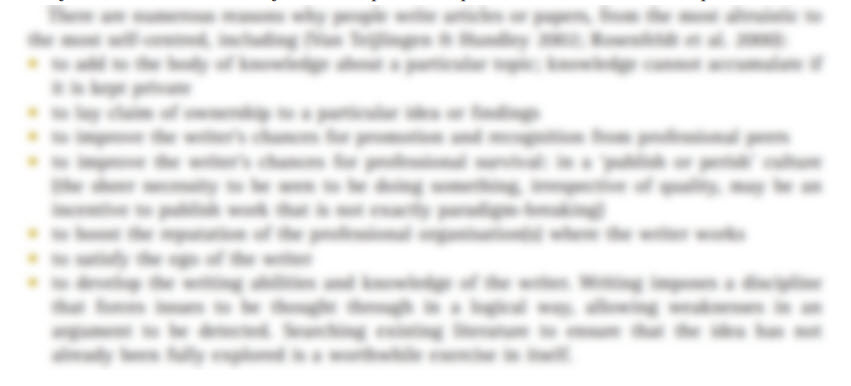
This writing guide follows on from my previous writing guide, How to Structure Bullet Point Lists and focuses on when to use bullet points and when to use paragraphs. Although the difference between the two is obvious, some writers create unwieldy bullet points (see Figure 1) that would serve better as a paragraph or write dense paragraphs that could serve the reader better if presented as bullet point lists.

Before a comparison between the two can be made, the information must be in a form of a list or be easily converted into a list, and this is usually possible if a paragraph has the structure of a statement, followed by examples.

The following example could be written as either a paragraph or a bullet-point list.

“Technical communicators can create technical information for new products or update existing information. They might research or test a product to interpret and test technical information or specifications. Some tasks include working with or interviewing subject matter experts (SMEs) to extract information and uncover the missing details that a user might need to know.”  (From https://www.astc.org.au/about-technical-communications)

In this example, the introductory element is: “Technical communicators can create technical information for new products or update existing information.” Everything else in the paragraph are examples of these tasks.

With minimal changes, this could be rewritten into a bullet-point list as follows:

Technical communicators can create technical information for new products or update existing information. Some tasks may include:

  • research or test a product to interpret 
  • test technical information or specifications
  • work with or interview subject matter experts (SMEs) to extract information and uncover the missing details that a user might need to know.

Figure 1: This is an example of a complicated bullet point list: some list items are very long

Some factors to consider when choosing to write paragraphs or bullet point lists

1. The length of your sentences 

If your sentences are:

-  long, bullet points might be easier to read.

-  short and there are a few of them, paragraphs may be just as easy to read as a bullet point list.

2. The number of list items

- If you have more than three list items within a sentence, consider turning them into bullet point lists.

- If you have many list items (i.e. more than 8-10), they may be difficult to read as either bullet point lists or paragraphs. If you do have very lengthy lists, consider using a table instead.

3. The number of bullet point lists in your document

The number and placement of bullet point lists affects the layout and presentation of your document. Too many successive bullet point lists may be difficult to read. If most of your document does consist of bullet point lists, try turning some into paragraphs to help break up the text. Be mindful that if you write bullet point lists within bullet point lists (also known as multilevel lists) make sure they are not difficult to read.

4. The size and number of your paragraphs

If you have many large paragraphs within a document, turning some into bullet point lists will help break up the text. Also consider breaking up large paragraphs into smaller paragraphs.

If you have many small paragraphs, then bullet point lists may not be necessary. Sometimes I find that if a document has lots of small (single sentence) paragraphs, then it ends up looking like a continuous bullet point list anyway.

Finally, don’t forget that the layout of your document influences its’ readability. So consider:

- What is the best way to effectively arrange your paragraphs and bullet point lists within your document?

- What is the best way to incorporate paragraphs and bullet point lists with other important features such as figures, tables, images and headings.

© Dr Marina Hurley 2021 www.writingclearscience.com.au

Any suggestions or comments please email admin@writingclearscience.com.au 

Find out more about our online science writing course...


SUBSCRIBE to the Writing Clear Science Newsletter

to keep informed about our latest blogs, webinars and writing courses.

How to structure bullet point lists

What are bullet point lists?

When lists are presented with one list item per line, following an indented marker or symbol. they are commonly referred to as ‘bullet points’ or ‘bulleted lists’. Bullet point lists are widely used in science report writing but are rarely used in peer-reviewed journal articles (primarily due to save space).

What is the purpose of bullet points lists?

Bullet point lists are generally used for unnumbered and unordered lists and allow information to stand out separately from paragraphs and other surrounding text. Well-designed bullet points help attract the reader's attention when skimming a document and help them to quickly absorb multiple subtopics.

Making sure that bullet points are structured correctly also helps writers to clarify their thinking. Bullet point lists avoid the need to force a sentence or paragraph to contain lengthy and unwieldy lists. They allow the writer to be more succinct as the repetition needed to link connected sentences within a paragraph can be removed. They can also help to reduce the word count if the list is composed of simple phrases or sentence fragments rather than complete sentences.

The problems with the use of bullet point lists

Many writers are unsure how to structure bullet point lists and use them incorrectly. Some writers use paragraphs when they could have used bullet points and some overuse bullet points instead of writing paragraphs. Some writers haphazardly throw all types of information into bullet points, making them difficult to read. Therefore, guidelines are necessary.

When and how should bullet point lists be used?

There are different ways to structure bullet points. However, ensuring consistency and clarity of meaning is crucial. Two common questions I’m asked are, “Should bullet points be capitalised?’ and “Should bullet points be followed with commas or semi-colons?” My answer to both is, that it depends on what you are writing and how your structure your introductory elements and list items. An introductory element is the use of a phrase, sentence fragment or complete sentence to introduce the bullet point list.

1. Bullet point lists are introduced with a phrase, a sentence fragment or a complete sentence (introductory element). 

The introductory element is usually followed by a colon (See Example 1).

Example 1

The following is a brief overview of:

- my understanding about the broad types of software tools on offer.

- how different pricing models influence my choice of tools.

- the current software tools I regularly use for writing, teaching and managing my training consultancy.

- what to keep in mind when searching for good software tools.

(from ‘FAQ: What software tools do I use for writing and teaching?’)

2. Each list member must logically complete the meaning conveyed in the introductory element.

As Example 1 is introduced with a sentence fragment (‘The following is a brief overview of:’) each list item must form a grammatically-correct complete sentence when combined with it. For example, the second list item would be read as: “The following is a brief overview of how different pricing models influence my choice of tools.” This is why the first word of each list item is not capitalised and why full stops are used at the end of each list item.

It is very common for writers to avoid this important guideline and not check to see if each list item logically follows on from the introductory element. An incorrect way to represent the information in Example 1 would be as follows:

Hypothetical (incorrect) Example 2

The following is a brief overview of:

- my understanding about the broad types of software tools on offer.

- how different pricing models influence my choice of tools.

- Includes a current list of software tools I regularly use for writing, teaching and managing my training consultancy.

- Also some tips to keep in mind when searching for the good software tools.

The last two list items, although still relating to the topic, do not follow on from the introductory element. For example, the 3rd list item would read, “The following is a brief overview of Include a current list of software tools I regularly use for writing, teaching and managing my training consultancy.This does not make sense.

3. If an introductory element stands alone as a heading, it doesn’t need any punctuation (see Example 3 below). 

Nevertheless, in this example you could still place a colon after the introductory element.

Example 3

Remember

- Plans are not meant to be perfect but act as a guide to your thinking and a framework to further develop the project you are working on.

- Keep all versions of your plans for future reference or to use as templates for future projects.

- Ask colleagues for feedback on your plans as well as your document drafts.

 (from ‘The essentials of science writing: plan before you write’ )

4. If the bullet points are composed of complete sentences, they should be each be treated as a normal sentence with capitalisation and terminal punctuation (e.g. full stop, question mark) (see Example 3 above).

5. Consistency is crucial:

- Use the same symbol or marker for your bullet points throughout your document.

- Although you may have different types (structures) of bullet point lists within the same document, all list items within a bullet point list should be the same format: all phrases, all sentence fragments or all complete sentences.

This is another reason why Example 3 is incorrect as the 3rd point is a complete sentence, while the 4th point is a sentence fragment and both are dissimilar in structure to the first two points.

6. Bullet point lists items that are phrases or sentence fragments need no punctuation (see Example 4 below).


Example 4

Common writing problems often reflect that a writer has not thoroughly considered who their audience is, or what they need. This can cause the following problems:

- providing too much (or not enough) detail or background information

- providing too much detail on unrelated sub-topics or on a well-known topic

- using the wrong language or unfamiliar terminology

- assuming the audience’s level of interest in, or understanding of, the topic

(from How to identify your target audience,)


7. Ensure that your list items are distinct from each other (compare examples 5 & 6).

Example 5

An example of distinct list items:

I agreed to the following decisions:

- the start date of the project.

- that the consultation committee have a maximum of five registered members.

- the due date of the first stage of the report.


Example 6

An example of indistinct list items:

The following is a brief overview of:

- my understanding about the broad types of software tools on offer.

- how different pricing models influence my choice of tools.

- how different pricing models influence the way I research software tools.

In this example, the 3rd list item is closely related to the 2nd list item, so I would either combine them all leave point 3 out.

8. The list items can be presented in any order. If they must be presented in a certain order, they should be numbered and considered a ‘numbered list’ and not a bullet point list (See example 7).


Example 7 

Example of a numbered list

Steps to complete your enrolment:

  1. Read the terms and conditions.
  2. Download and complete the application form
  3. Email the application form to emailus@address.com
  4. Follow instructions in enrolment notification email.

9. Use commas or semi-colons at the end of each list item if you are presenting a list as though it was part of an entire sentence (see Examples 8 and 9). 

Hypothetical Example 8 (with commas)

The site contained the following species:

- Eucalyptus saligna,

- Eucalyptus siderophloia,

- Eucalyptus oreades and

- Eucalyptus regens.

As a complete sentence this would be written as “The site contained the following species: Eucalyptus saligna, Eucalyptus siderophloia, Eucalyptus oreades and Eucalyptus regens.”

This type of bullet point list could also make a complicated list easier to read than if it was written in a sentence (see Example 8).

Hypothetical Example 9 (with semi-colons)

The site contained the following species:

- Acacia daviesioides (over 3 dozen seedlings);

- Acacia glaucoptera (3 shrubs);

- Acacia incurve (over 1000 small to medium shrubs);

- Eucalyptus saligna (over 200 seedlings);

- Eucalyptus siderophloia (one large tree and 3 saplings);

- Eucalyptus oreades (six saplings) and

- Eucalyptus regens (over 300 trees).

As a complete sentence this example would be written as “The site contained the following species: Acacia daviesioides (over 3 dozen seedlings); Acacia glaucoptera (3 shrubs); Acacia incurve (over 1000 small to medium shrubs); Eucalyptus saligna (over 200 seedlings); Eucalyptus siderophloia (one large tree and 3 saplings); Eucalyptus oreades (six saplings) and Eucalyptus regens (over 300 trees).

If you find you are writing these types of sentences or bullet point lists, depending on the type of document you are writing, it might be better to use tables instead.

© Dr Marina Hurley 2021 www.writingclearscience.com.au

Any suggestions or comments please email admin@writingclearscience.com.au 

Find out more about our online science writing course...


SUBSCRIBE to the Writing Clear Science Newsletter

to keep informed about our latest blogs, webinars and writing courses.

What is the difference between a good idea and a theory?

Some terms used to discuss and describe science are often used interchangeably which can cause confusion: for example, terms such as fact, hypothesis, theory, knowledge, information, results and findings. In this writing guide, I define some commonly-used terms used to describe science, while also explaining how science information is produced. 

I need to first acknowledge that numerous philosophers and have spent many years, even entire lifetimes, debating and discussing the precise meaning of some of these terms. So I encourage you to read some of the books by important science authors and philosophers including Thomas Kuhn, Karl Popper, Stephen Jay Gould and Stephen Hawking to develop a solid understanding of science philosophy and the current developments in science. Bill Bryson’s Short History of Nearly Everything is also an excellent coverage of science suitable for a wide audience.

Knowledge versus information

The term knowledge is often used instead of information. However, science knowledge is what people gain or learn through absorbing science information or through doing their own research. Science information is a collection of facts that is based upon evidence which is the result of peer-reviewed or peer-verified research.

The degree to which science information is considered true and correct will vary according to when the research was published, how large or lengthy the study was and the amount of published evidence that supports this information. Undoubtedly, there is a lot of information that may be considered true but is yet to be scientifically tested; for example, some home remedies for illnesses.


Facts, assumptions and opinions

A scientific statement of fact is an explanation of a phenomenon or something that is generally held to be true and can be proved by evidence. Facts can later be disproved, as can hypotheses and theories. Communicating information as a judgement or a statement of fact, but without providing proof that it is true, is expressing an assumption, while believing that something is true based upon little or incomplete evidence is forming an opinion.

Scientific opinions are generated from science knowledge, and may or may not be true, but they are important for developing new ideas, new hypotheses and new science. Scientific opinions and ideas need to be developed into hypotheses or problems that can be tested and supported (or rejected) by research.

What should be cited

Strictly speaking, all science information that is not common knowledge should be cited; that is, the source of the information should be presented so that the reader can verify that the information is supported by evidence. Where relevant, opinions should also be acknowledged, otherwise, it may be difficult for a reader to understand the difference between a scientific opinion and an uncited statement of fact (common knowledge).

Common knowledge is what would be generally be accepted as being true without question by a large proportion of a group of people familiar with a certain topic. What is accepted as common knowledge of a topic will depend upon the background, knowledge and experience of the reader.

Results versus findings

The science information produced by a study and published in a research paper is also known as the study’s findings. Collectively, both the Results and the Discussion parts of a research paper represent the authors findings. The Results present the data or observations of the study and the Discussion presents the author’s interpretations that explain what these results mean in relation to the scientific problem under investigation.

Traditionally, the format of the research paper is to distinctly separate the Results and Discussion sections so that the bare measurements of the results are not mixed in with, and made indistinguishable from, the author’s discussion or interpretations of their results. As different people may interpret the same data differently, it was (and still is) considered important to allow the reader to clearly see the results in isolation.  However, it may be difficult to separate results and discussion with some types of projects and within some disciplines.

Scientific interpretations are based upon the author’s knowledge, which is gained through their experience, through their reading and through their analytical (inductive and deductive) skills. If these scientific interpretations are accepted by peer-review and published, they may then be considered scientific facts. If other authors disagree with the interpretations in a published paper, they are expected to publish their own papers accordingly and a scientific debate may ensue. Individual interpretations will develop into a scientific consensus when similar studies produce similar results and different authors develop similar conclusions.

Similarly, a theory is supported by consensus. A theory describes the behaviour or activity of a phenomenon or phenomena. It is a statement supported by accepted hypotheses and empirical evidence. A hypothesis is a statement that describes the properties or behaviour of an object or phenomena. A hypothesis is either supported or rejected based upon the evidence developed from testing the hypothesis. A specific, simple hypothesis or null hypothesis is one designed to be easily tested; it can be either accepted or rejected or upheld or discarded. If repeated tests under different circumstances support the hypothesis, then the hypothesis can be developed into a theory. From this theory further hypotheses can be generated. A theory can be supported, validated, reframed, modified or rejected according to evidence. A theory that has been refuted must be discarded and is no longer referred to as a theory.

© Dr Marina Hurley 2021 www.writingclearscience.com.au

Find out more about our new online course...


SUBSCRIBE to the Writing Clear Science Newsletter

to keep informed about our latest blogs and writing workshops.

How to write from home

If you need to write from home or in a new or unfamiliar environment, you might find it challenging to stay focused. This guide suggests ways to help you maintain focus and improve your productivity when writing at home. In this guide I refer to ‘writing sessions’. These are activities planned in advance, last for a certain period of time and during which you only write, rewrite or edit. 

1. Create a Zone of Silence

The principles of creating a Zone of Silence at home are similar to creating a zone of silence in your workplace. The rules of the Zone of Silence are that you:

  • Work in an area that is devoted to writing.
  • Only work on one project at a time.
  • Only have access to the writing and reading materials needed for your current project.
  • Turn off your access to the internet and telephone.
  • Limit any unnecessary interruptions and distractions.

Although these conditions may be hard to meet at home, the following suggestions may also help you follow these rules:

  • Complete all internet-based research before you start your writing sessions.
  • Wear headphones and listen to background or instrumental music while writing.
  • Choose times to write when your house or apartment is empty or quiet.
  • If you normally write with a desktop computer, occasionally try switching to writing with a laptop; you may then find it easier to confine yourself to smaller writing-devoted areas.

2. Turn writing into a habit

When you regularly repeat a task, it takes gradually takes less motivation to start and complete this task.

Try setting up a writing routine by planning regular writing sessions, either daily or every second day. However, don’t be too optimistic when setting time limits for your writing sessions. It can be difficult to turn writing into a habit if you think you need to set aside large blocks of time before you can write (e.g. a full day or 2-3 days in a row), so establish a writing routine by starting small. Shorter tasks are easier to complete and are less likely to be put off.

First allocate short writing sessions, e.g. 15-minute duration. As you develop your routine, gradually increase your time limit to 60-minutes per writing session. Allocate longer sessions if appropriate or if working to a deadline.

Don’t be too harsh on yourself if you skip some days while developing your routine. Don't let the fact that you’ve skipped a few days be an excuse for avoiding further attempts to establish a routine.

3. Get started by reviewing your previous draft

Getting started is a common problem no matter where you write. One suggestion is to routinely begin each writing session by first reviewing what you wrote during your last writing session. Refreshing your thinking about what you were working on previously may make it easier to start writing. But first print out your previous draft instead of just viewing it on screen, then edit it with a pen. Periodically printing out your document makes it easy to view your draft in its entirety which is difficult to do via a computer screen. When you finish each writing session, print out your final version, so you have physical evidence of your writing progress and are ready for your next session.

4. Find a writing buddy

A writing buddy is someone you might work or study with who also needs to write regularly. A writing buddy is someone who reads your writing and gives you feedback and in return you read their writing and give them feedback. You can email documents to each other and critique each other's work for clarity or complete general editing or proofreading.

You might find that committing to swap editing and feedback will help you be more productive and to create regular writing routines. You might also want to schedule regular catch-ups to discuss your work, either face-to-face or through online meeting platforms.

Remember…

Avoid creating unrealistic expectations on how much writing you can do in an unfamiliar environment. It is unrealistic to expect that we can be super-productive writing machines that can write anything, anywhere and at any time. Aim to write in intensive pre-organised, short blocks of time in an environment that is as comfortable and distraction-free as possible.

Find out more about our new online course...


SUBSCRIBE to the Writing Clear Science Newsletter

to keep informed about our latest blogs, webinars and writing courses.

Handwriting notes and to-do lists is still a good idea

Writing to-do lists on paper might seem a waste of time if you already prepare to-do lists with software. Project management software such as Asana and Trello are effective and powerful tools and I am not suggesting we stop using them and go back to paper. My concern is that relying on software might cause a lack of spontaneity when doing research and in capturing ideas when working on other tasks. Well-designed paper lists and organised note-taking can still play an important role in project management and be used in conjunction with software. 

There are important benefits to hand-written note-taking that we might overlook if we decide to only write electronically:

1.  It’s quick and easy to jot down short tasks and simple ideas on paper

When we are in the middle of a task and come up with a good idea or something we need to remember, it may be easier and less distracting to just jot these thoughts down on paper. Having to open up software, allocate an idea or task to a project description, describe the task, decide who is responsible for a task and when it should be completed is time-consuming.

2. Not everything we write needs to be kept

 Not everything we write down will be worthy of further consideration. Occasionally, ideas or tasks will become inconsequential or lose attraction if they are left for a period of time. If paper lists are reviewed every 1-2 days, items or ideas that are no longer relevant can simply be crossed off or ignored. While improved technology may allow us to collect more information, it can contribute to information overload. Using electronic tools to capture everything we have to do or every idea we come up with might mean we end up with huge lists of items that will all need to be reviewed at some point.


3. A paper list is easy to refer to and doesn’t need batteries

Using paper lists to record tasks and ideas is easy to refer to. Even with multiple computer screens it is difficult to keep more than 2 or 3 pages of anything open at the same time. You can also take a quick snap of your paper list with your smartphone if you need a quick backup or want to share it.

4. Handwriting can force you to summarise effectively

Note-taking helps to focus attention on more important items and reviewing notes is also beneficial for recall (Kiewra 1985, Kiewra et al. 1991). While note-taking by typing or vocal recording is effective and easy with software, what you record still requires effective classification for easy retrieval. If you tend to take too many notes indiscriminately, it may be difficult to later decide what is important. As the act of handwriting is usually slower than typing, we are forced to highlight what is most important. Therefore, compiling paper lists may help you to summarise important information quickly. Ideas and tasks that remain after reviewing paper lists can then be transferred to software.

What are the features of a well-designed to-do list?

Ultimately what works best for you will depend upon how you work and organise your time. I have developed the Daily Task & Ideas Workbook and offer it here free of charge (and no email signup). This workbook is designed to be printed out and used to capture ideas and tasks on paper, while simultaneously allocating the priority and stage of completion of different tasks. This workbook can also be used to help you identifying new tasks and projects. The workbook has two pages (Page 1 - Daily Task List and Page 2 - Ideas & Brain Dump) with the following sections:

Page 1 – Daily Task List.

ROCKS (Must do today); PEBBLES (Must do soon); SAND (Short, discrete tasks)

The three sections in the first column are used to record tasks of different priorities. I use the ROCKS/PEBBLES/SAND analogy where the difference in sizes between ROCKS, PEBBLES and SAND mostly relates to the priority of the task. The general idea is that you can only fit in a certain number of large ROCKS in a container but the container is not yet full as you can still fit in smaller PEBBLES. After you have placed in all the pebbles that will fit into the container, you can still pour in SAND.  I have adapted this idea so that ROCKS are the tasks that must be completed today, PEBBLES are tasks that must be completed soon while SAND tasks are the short, important tasks that can be completed in between other tasks or when you lack energy or time to complete larger tasks.  When your list is reviewed, invariably, PEBBLES and SAND will become ROCKS if they are left incomplete and grow increasingly important.

The three sections in the second column are used to record tasks that are COMPLETED; STARTED/ONGOING; and OVERDUE/SCRUB TICKS.  Personally, I like to highlight tasks that have been COMPLETED during the day as this gives me a visual reminder of what I have achieved and helps me to feel productive.

Page 2 – Ideas & Brain Dump

This page is designed to capture brand new ideas and to identify new projects, sub-projects and tasks. It also includes a section to record topics that need research and projects that need updating.

My recommendation is to use the Daily Task & Ideas Workbook it for 1-2 days then review the content. Items that haven’t been crossed out or completed can be either moved to a fresh workbook or to project management software. The Daily Task & Ideas Workbook can be downloaded here: version 1

REFERENCES 

Kiewra, K. A. (1985). Investigating notetaking and review. A depth of processing alternative. Educational Psychologist, 20, 23-32

Kiewra, K., Mayer, R., Christensen, M., Kim, S., & Risch, N. (1991). Effects of repetition on recall and note-taking: Strategies for learning from lectures. Journal of Educational Psychology., 83(1), 120-123.

© Dr Marina Hurley 2021 www.writingclearscience.com.au

Find out more about our online courses...


SUBSCRIBE to the Writing Clear Science Newsletter

to keep informed about our latest blogs, webinars and writing courses.